ACCESSIBILITY CONSULTING

Build accessibility into your next decision.

Turn accessibility questions into clear requirements, informed design choices and a practical plan for your team.

AccessTekIT works with organizations across Canada to bring accessibility into planning, design, development and publishing, with advice shaped around your product and the decisions ahead.

PLANNING, DESIGN AND DELIVERY

When to bring us in

Before a project starts

Translate a project goal into accessibility requirements, responsibilities and review points. Identify the journeys, content and platforms that matter, discuss access to third-party products, and plan how the team will gather evidence as the work develops. Agree the early decisions that need input from design, content, development and QA.

While making design decisions

Review proposed journeys, wireframes and component behaviours before implementation. Discuss keyboard interaction, focus, instructions, errors and content structure, then record the decisions developers and testers need to carry into the build. Identify unresolved questions and agree when the team can check the implemented behaviour.

When priorities are unclear

Bring together existing findings, product plans and team constraints. Discuss user impact, dependencies and ownership so the team can sequence improvements, identify questions that need investigation, and agree what evidence will show progress. Record the next actions and decisions so each owner understands what to address and when to review it.

ADVICE SHAPED AROUND YOUR WORK

Where we can help

We agree the questions to address, the materials to review and the level of support. Advice can cover a defined decision or continue across agreed milestones.

Requirements and acceptance criteria

Define accessibility expectations for websites, apps, documents and publishing workflows. Connect the agreed technical criteria to user tasks, content needs and acceptance criteria so design, development and QA share a clear understanding of the work. Record the assumptions and review points the team will use to confirm implementation.

Journeys, designs and components

Review navigation, forms and component specifications with your team. Discuss interaction states, reading order, labels, error recovery and focus behaviour. Record recommendations, the reasons behind them and questions that require a working build to evaluate. Help the team carry those decisions into implementation and review.

Processes and team responsibilities

Identify where accessibility reviews, content checks and testing fit into delivery. Clarify who makes decisions, who implements changes and who verifies outcomes. Help teams plan practical handoffs and keep decisions visible as people and priorities change. Agree how new content, shared components and product updates will receive ongoing review.

Documents and communications

Advise on templates, authoring practices and review steps for documents, emails, graphics and multimedia. Discuss how teams will provide text alternatives, structured content and media alternatives. Plan checks for the formats and channels they publish, with clear ownership for reusable templates and later updates.

FROM QUESTIONS TO A WORKABLE PLAN

Make the decisions before the build

For a new application form, your team may need to decide how instructions, required fields, validation messages and confirmation will work across desktop and mobile.

We review the proposed journey, discuss interaction and content requirements, and record decisions for design and development. Together, we define acceptance criteria and identify which behaviours QA should verify in the working form.

As the build develops, unresolved questions can feed into an agreed review or testing milestone.

PRIORITIES AND OWNERSHIP

Turn competing priorities into a plan

When accessibility work spans several teams, we help connect user impact with the decisions, dependencies and responsibilities that shape delivery.

Start with the affected task

Discuss what people are trying to do and where a barrier interrupts that task. Use available findings, support feedback and product context to identify consequences for users. Record where more evidence is needed before the team can make a reliable priority decision.

Sequence work around dependencies

Identify shared templates, design components, content changes and supplier dependencies that affect several issues. Discuss which changes unlock later work and where teams need to coordinate. Plan review points around those dependencies so corrections can be implemented and checked in a workable order.

Define progress your team can verify

Agree owners, next actions and the evidence needed to close an item. Separate decisions awaiting approval from changes awaiting implementation or verification. Review the plan at agreed milestones, updating priorities when the product changes or new evidence becomes available.

CONSULTING DELIVERABLES

What your team receives

Deliverables reflect the agreed engagement. We confirm the decisions, review coverage and handover materials before work begins.

Requirements and decision notes
Agreed accessibility expectations, acceptance criteria, assumptions and open questions. The notes explain which journeys and materials were considered, why a decision was made and what the people implementing and reviewing the work need to carry forward.
Design or process recommendations
Actionable recommendations linked to the materials reviewed, the affected tasks and the decisions your team needs to make. Each recommendation records its purpose, relevant dependencies and any review limits, with follow-up checks for behaviour that needs a working product.
A prioritized action plan
Agreed next steps, proposed owners, dependencies and review points. Your team can use the plan alongside its product backlog, release milestones and available capacity. The plan records questions awaiting a decision and work that requires further evaluation before priorities can be confirmed.
A handover and follow-up record
A walkthrough of recommendations and agreed decisions, with outstanding questions and the evidence needed to confirm implementation at the next milestone. We identify who will take each next step and record any further review, testing or support included in the engagement.

WORKING TOGETHER

How we work with your team

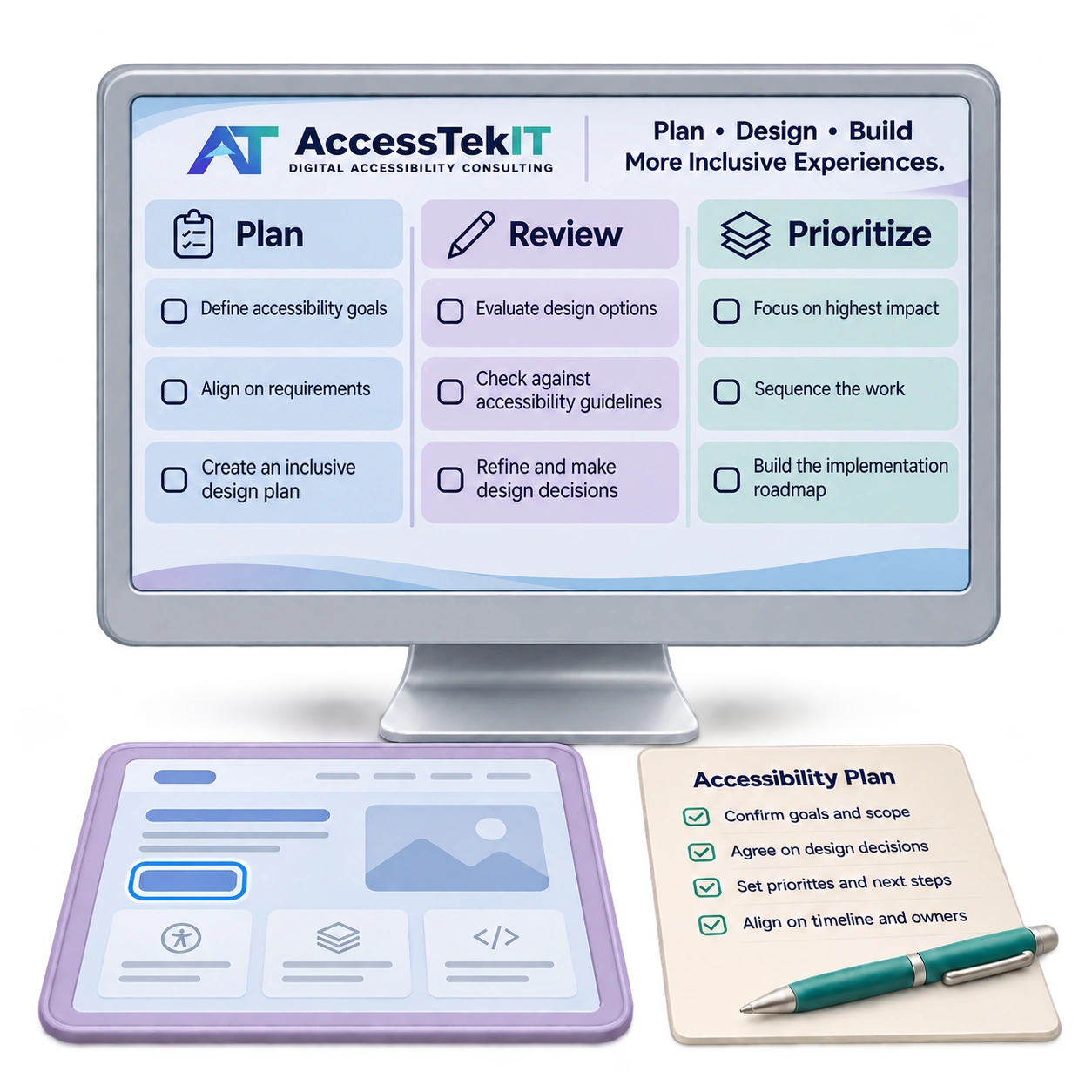
  1. Understand the decision

    Share the product, audience, stage of work and questions your team needs to resolve. Agree the scope, materials, people and expected outputs.

  2. Review the context

    Examine the agreed designs, requirements, existing findings or workflows. Identify assumptions, dependencies and areas that need more evidence.

  3. Work through the options

    Discuss recommendations with the people responsible for delivery. Record decisions, responsibilities and practical next steps for the agreed scope.

  4. Plan the next check

    Agree how the team will review implementation, resolve open questions and verify outcomes. Schedule further advice or testing where included.

THIRD-PARTY PRODUCTS AND SHARED EXPERIENCES

Plan for the parts your team depends on

Embedded tools, vendor platforms and externally supplied content can affect the journeys your organization provides. We help your team define its questions and coordinate the next steps.

Map the shared journey

Identify where a person moves between your website, an embedded service, a document or a supplier’s platform. Discuss which team controls each part and where handoffs may introduce barriers. Record access constraints and questions that need input from another owner.

Ask for relevant evidence

Review what a supplier has provided against the product version, tasks and requirements your team needs to understand. Identify gaps in scope or supporting detail, prepare follow-up questions and agree where direct evaluation is needed to inform a product or purchasing decision.

Agree responsibilities and follow-up

Clarify who will raise supplier questions, track responses and coordinate any evaluation or correction work. Discuss how your team will communicate known barriers and arrange appropriate support for affected tasks. Record dependencies and review dates so open issues remain visible after handover.

COMMON QUESTIONS

Questions before you start

Can you help before we have a working website or app?

Yes. We can work from project briefs, user journeys, wireframes, content plans and component specifications. The review focuses on the decisions those materials support. We record what needs to be checked once interactions exist in a working build, so the team can plan verification alongside implementation.

How does consulting fit with an audit or testing?

An audit provides a structured assessment of an agreed product scope. Testing checks defined journeys, features or fixes in a working product. Consulting helps your team interpret requirements, work through decisions and plan its approach. Existing audit findings or testing evidence can inform that advice. Explore Accessibility Audits.

Can you help us act on existing findings?

Yes. We can review the findings with your team, discuss user impact and dependencies, and help organize ownership and priorities. Detailed correction advice and verification can be included in an agreed remediation engagement. Explore Remediation Guidance.

Can you support our team across several milestones?

Yes. We can agree review points around planning, design, implementation and release. Each milestone has a defined purpose, materials and expected output. We confirm response times, meeting arrangements and any testing or follow-up work in the proposal.

Can consulting guarantee accessibility or legal compliance?

Consulting provides recommendations for the agreed questions and materials. Outcomes depend on implementation, product coverage and verification. We record assumptions and limitations, and agree any evaluation needed to support a conformance claim. Questions requiring a legal interpretation should be taken to qualified legal counsel.

KNOWLEDGE CENTRE

Guidance for your next decision

Plan accessibility for a website project

Plan requirements, responsibilities and evaluation before project work begins. Use the guide to identify the information your team needs, discuss accessibility across delivery milestones, and prepare review points that fit the project.

Review vendor accessibility evidence

Examine the scope, currency and supporting detail in a vendor’s accessibility evidence. Use the guide to prepare questions, identify missing information and decide which claims need further investigation before a purchase or renewal.

Accessible document workflow

Organize authoring and review steps for documents your team publishes repeatedly. Use the guide to plan structured templates, source-file checks and verification after export, with clear responsibilities for corrections and future updates.

YOUR NEXT STEP

What decision is your team working through?

Tell us what you are planning, what is uncertain and when your team needs direction.