
Technical compliance support
Digital accessibility compliance support.
We evaluate websites, applications, and digital documents against agreed technical criteria, such as WCAG or EN 301 549. We help your team translate regulatory, procurement, or internal requirements into a test scope, prioritize fixes, and verify agreed corrections.
When to bring us in
When compliance support is useful.
- Preparing for launch
- We define what to evaluate against your agreed accessibility target. We identify the release version, the tasks users need to complete, and the screens and states to include. Your team can use that scope to schedule testing and decide which findings need attention before launch.
- Acting on existing findings
- We review your audit findings and check which ones still apply to the current product. We group barriers that share a cause, prioritize them by user impact, and identify teams that can address them. This gives your team a plan it can assign and track.
- Verifying fixes before a review
- We retest agreed corrections on the updated product before a release, internal review, or reporting deadline. We repeat the affected tasks, record the version and test conditions, and distinguish verified fixes from issues still open. The results support progress reporting.
Compliance support in practice
What your team receives.
Evaluation scope
We map confirmed requirements to the websites, apps, documents, and user journeys in scope. We record the technical criteria, existing evidence, and questions that need clarification before evaluation.
You receive: an agreed scope that shows what will be evaluated and against which criteria. See Accessibility Audits for evaluation methods.
Prioritized remediation plan
We group findings by affected task or shared component, prioritize fixes by user impact, and identify which teams can address them. We also flag dependencies that can affect the order of corrections.
You receive: a prioritized remediation plan your team can use to assign work and track progress. See Remediation Guidance for support with corrections.
Verification record
Where retesting is agreed, we check corrections in the updated product and record the version and workflows tested. We document what was resolved, what remains open, and which areas need further review.
You receive: technical evidence for internal reviews, accessibility planning, or progress reporting, with the limits of verification recorded.
Standards and requirements
What we evaluate against.
We agree on the technical standard, version, and level before testing. The target reflects the requirements for the engagement and the digital product in scope.
- Technical standards
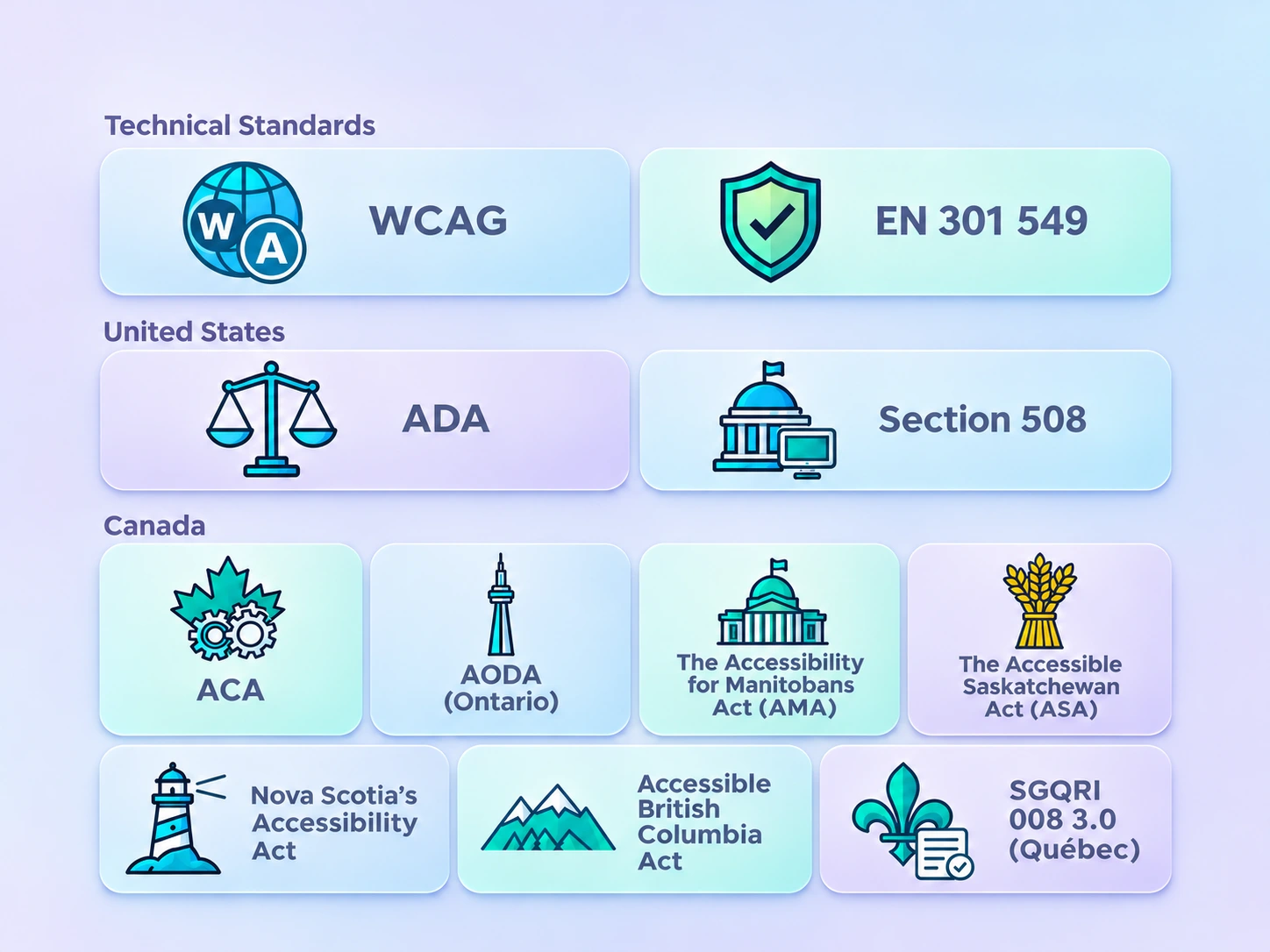
- We evaluate against the agreed Web Content Accessibility Guidelines (WCAG) version and level, such as WCAG 2.2 Level AA. For ICT engagements that specify them, we scope the relevant criteria from EN 301 549 or its Canadian adoption, CAN/ASC–EN 301 549:2024. We also review PDF accessibility and can discuss PDF/UA (ISO 14289) when a project specifies it. We record the standard and edition used so results can be compared after fixes. Explore WCAG versions and levels.
- Canada
We scope digital evaluations, document barriers, and prioritize corrections for work involving:
- Accessible Canada Act (ACA)
- Accessibility for Ontarians with Disabilities Act (AODA)
- The Accessibility for Manitobans Act
- The Accessible Saskatchewan Act
- Nova Scotia’s Accessibility Act
- Accessible British Columbia Act
- Québec Web Accessibility Standard (SGQRI 008 3.0) for covered public bodies
- United States
- We evaluate websites and mobile apps against agreed technical criteria for projects involving the Americans with Disabilities Act (ADA), including state and local government digital services under Title II. For Section 508 projects, we scope relevant requirements for U.S. federal information and communications technology, including web content, software, and electronic documents. We document findings and agreed retest results for the version reviewed.
- European Union
- We help evaluate public-sector websites and mobile apps for projects involving the EU Web Accessibility Directive. For projects involving the European Accessibility Act, we scope relevant digital experiences for covered products and services, such as e-commerce. We agree on the applicable technical criteria and the edition of EN 301 549 where specified. Findings show which user journeys were tested and which barriers affect tasks such as finding information, completing forms, or checking out.
Procurement and reporting
We evaluate agreed technical criteria from tenders, contracts, and internal policies. We document the product version and features evaluated, tie findings to the agreed criteria, and identify gaps in the available evidence. That record can support a tender response, an internal review, or follow-up with a supplier.
For an Accessibility Conformance Report or vendor evidence review, see VPAT® / ACR Reporting Services.
Your organization confirms which legal or contractual obligations apply. AccessTekIT agrees with you on the technical criteria and scope before testing and documents what the evaluation found.
Worked example
From an accessibility barrier to a verified fix.
An online application form fails to tell a screen-reader user which field needs correction after an unsuccessful submission. Here is how that finding moves through the work.
- Document the barrier
- We record the affected field, the steps to reproduce the failed submission, and what the screen reader announces. We also note where keyboard focus lands and whether the error can be found from there. This shows where the applicant gets stuck.
- Recommend a correction
- We recommend identifying the field in the error summary, linking the message to the field, and explaining how to correct the entry. We also describe how keyboard focus should behave after submission so the applicant can find the error, return to the field, and try again.
- Verify and report
- If retesting is in scope, we repeat the failed submission on the updated form using a keyboard and screen reader. We check whether the applicant can find the error, correct the field, and submit successfully. We record the outcome, the version tested, and any remaining barriers.
Accessibility planning and reporting
Technical evidence for accessibility plans and progress reports.
Technical findings can help teams plan accessibility improvements, respond to feedback, and report progress.
- Planning. Digital barrier findings and remediation priorities can inform actions in an accessibility plan.
- Feedback. We can evaluate a reported digital barrier and document the affected task and suggested correction.
- Progress reporting. Evaluation and agreed retest results can help document completed corrections and work still open.
AccessTekIT provides technical evaluation, remediation guidance, and evidence. Your legal or compliance team confirms which obligations apply and your organization owns its compliance decisions.
Start a conversation
Discuss your accessibility compliance work.
We can help define the evaluation scope, review existing findings, or verify agreed corrections.